
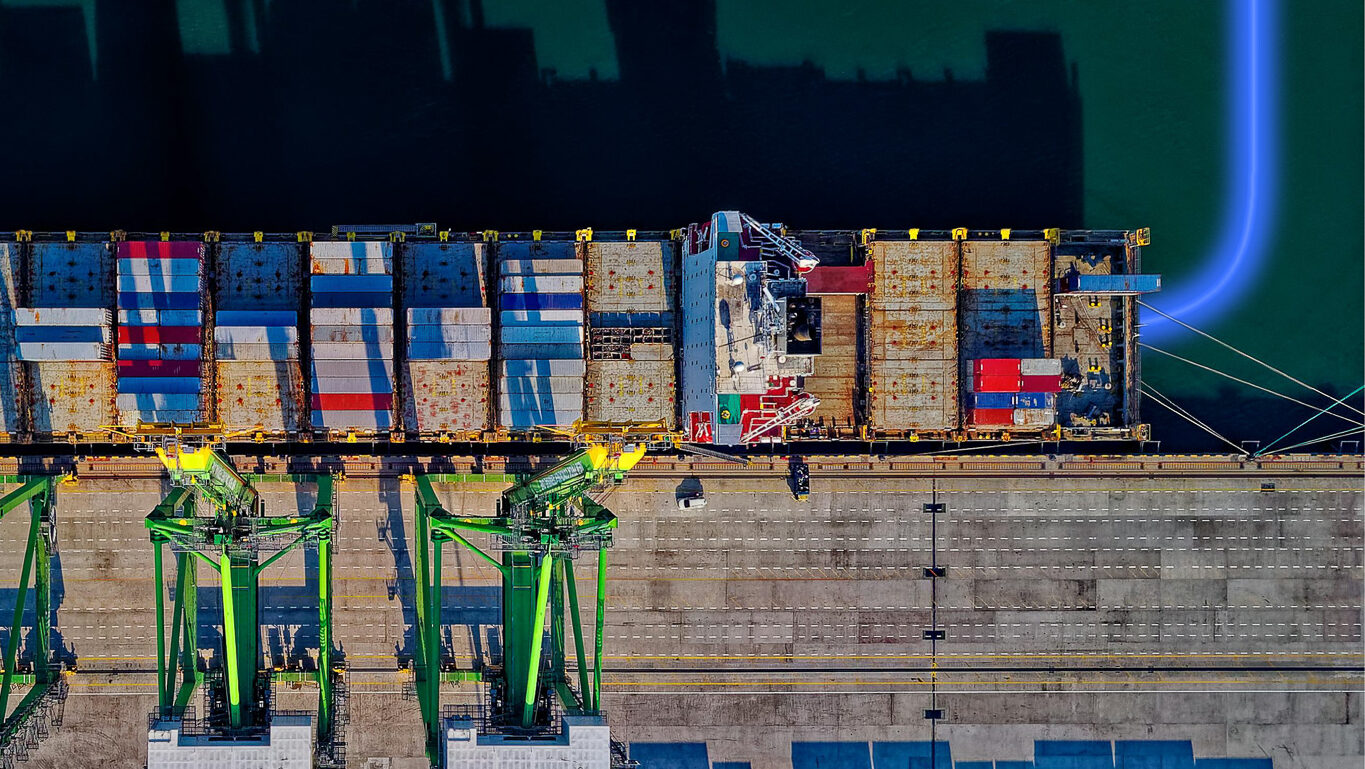
The Vancouver Fraser Port Authority (the port authority) plays a vital role in Canada’s economic engine. As the arm’s length federal agency responsible for the shared stewardship of the Port of Vancouver, Canada’s largest port located in Vancouver, British Columbia, they work tirelessly to ensure the smooth flow of goods in and out of the country. But how exactly do they achieve this?
As a Canada Port Authority, established under the Canada Marine Act, they work to ensure the Port of Vancouver remains competitive and reliable, and collaborate with port community partners and First Nations to responsibly facilitate Canada’s trade for the benefit of all Canadians. They lease out lands to terminal operators who move cargo through the port, lead infrastructure projects to support trade growth, serve as a permitting authority, and run a suite of environmental programs working closely with local communities to minimize the impacts of port activity. They collaborate with other agencies on port safety and security, and contribute to the competitiveness, growth and prosperity of the Canadian economy.
The port authority is continuously seeking ways to improve efficiency and adapt to a changing world. This includes implementing new technologies to streamline processes and exploring solutions for future growth at the Port of Vancouver, such as increased rail capacity to handle rising trade volumes. The port authority’s impact is far-reaching. By working with partners to help keep goods moving efficiently at the Port of Vancouver, they contribute to a strong Canadian economy, support local communities, and ensure a safe and sustainable port operation for the future.
One of those technologies is Content Server by OpenText. Used by VFPA to make sure that documentation and information is readily available to the right people, securely, safely and efficiently. As with any external software, there is a potential issue with needing expertise you may not have. Heavy customisation, bespoke implementation and a need to stay up to date means you may need other people to support you which adds risk. Using a more standardised approach to 3rd party software can act as a mitigation to this, which is where Turnpikes’ first conversation began with VFPA.
They wanted to go from their existing implementation and framework to a more standardised setup that allowed them to make more changes using their internal resources and rely less on external parties. Something that would make them more flexible, more agile, and ultimately cut long-term costs. With a new taxonomy and workspace layout, there was a need to migrate existing content safely and consistently into the new workspaces, which would be more efficient.
This migration was essentially a move of Content Server Objects from one location, within Content Server, to another location, within the same Content Server. Seeing that both the ‘Source’ and the ‘Destination’ is within the same physical environment the migration actions needed to be performed internally to that environment and not executed externally.
The backbone of this work was between WebReports, an existing component of Content Server and the Turnpikes Migration Tool. A proprietary product capable of supporting the relocation of documents on mass. This required precision, understanding of the outcomes hoping to be achieved and the right technical solutions to allow the move. This was a complex task, taking a large amount of time and effort from the project team. Using the migration tool from Turnpikes reduced the risk and the time taken to perform this. Allowing the port authority to be confident that they could run the tool independently.
This ultimately helped the Vancouver Fraser Port Authority to be able to achieve their goals quicker, helping them live up to their responsibility to support the Canadian economy. By being able to share information internally quicker they can save time, money and resources. Large volumes of data are stored securely, with auditable and trackable access. Working with the internal departments meant that we had to be sensitive to the compliance and regulatory landscape. Something that benefits further work in other departments to follow.
“Working with Turnpikes was something born out of a need to deliver the project safely, securely, on time and on budget. We are now more capable of managing our own records independently and in a timely manner, confident in our ability to keep them accurate and well-maintained on our own terms. This positions us to stay responsive to our records commitments to the community and country.”
Nicole Hennessy, Manager Enterprise Content and Productivity Technology – VFPA
“Clear brief and honest conversations were the foundation of getting this right for the Vancouver Fraser Port Authority. Having people on the ground, locally available who understood the region and coupling that with our extended knowledge in the company meant we could design a plan which supported the migration and moved it forwards. We are excited to see the benefits come to fruition and what the port authority can deliver in the future, we will of course always be there to support when they need us.”
Tim Stijven Founder and CEO – Turnpikes